What's Included in a Professional Mold Inspection
Know exactly what to expect before, during, and after your inspection. A plain-English, step-by-step guide from MasterTech York with 17+ years and 8,000+ inspections in York, PA.
More Than a Visual Check
A lot of people assume a mold inspection is just air samples and a lab report. In reality, a proper mold inspection looks at the full picture: moisture, building conditions, and how mold could be forming in the first place.
This guide walks through what MasterTech York includes in every inspection so you know what to expect and why each step matters. No scare tactics. No confusing jargon. Just straightforward answers so you can make the best decision for your home and family.
Visual Inspection
The Foundation of Every Assessment
Every mold inspection begins with a thorough visual walkthrough of the home or building. This isn't just a quick look around. It's a methodical inspection of areas where moisture problems and mold growth are most likely to show up.
- Visible mold or staining on surfaces
- Past or current water damage indicators
- Signs of leaks, seepage, or condensation
- Musty odors or areas with poor airflow
Moisture Mapping
Finding What the Eye Can't See
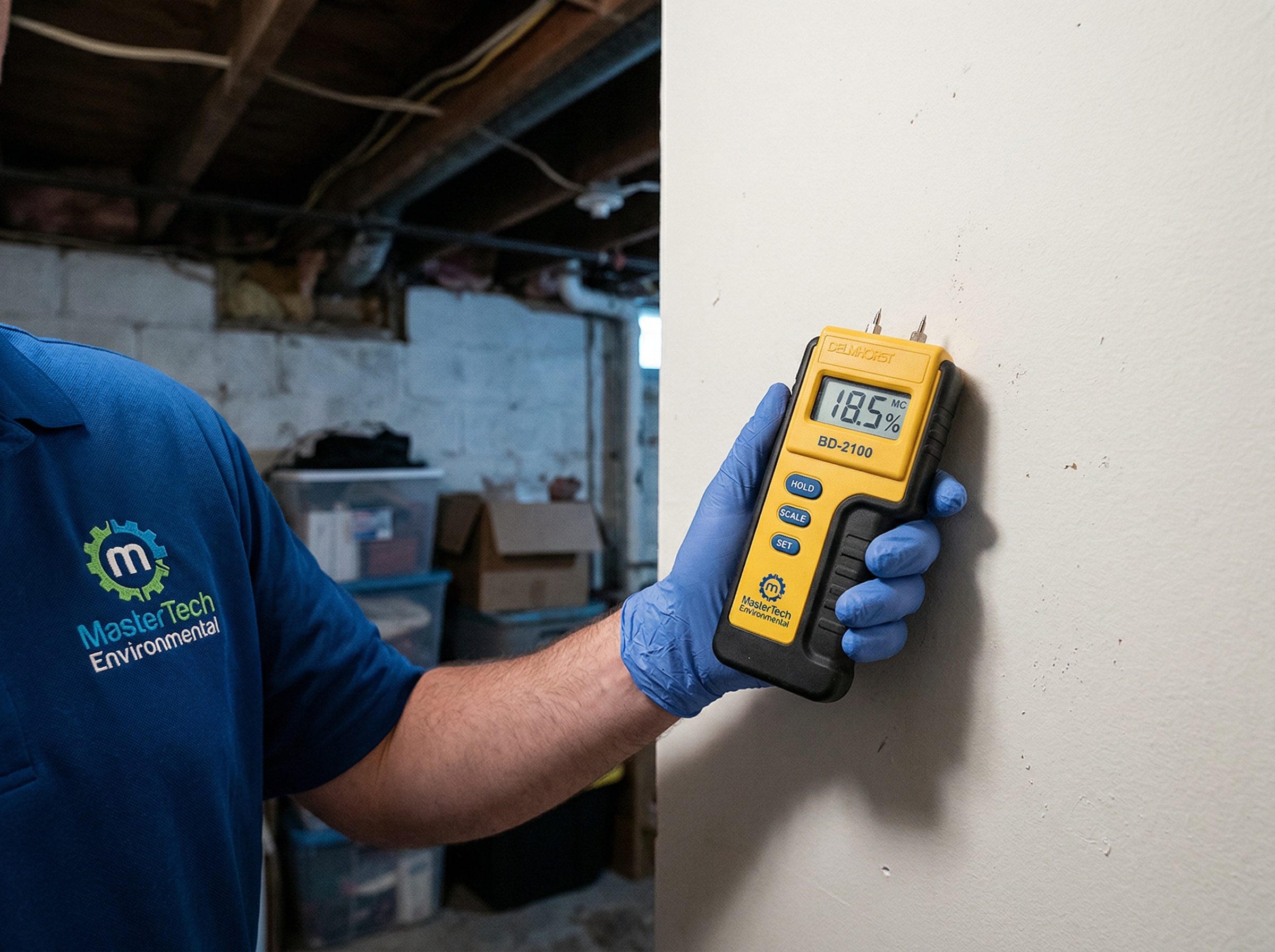
Mold doesn't grow without moisture, so locating moisture is one of the most important parts of any inspection. Moisture problems often exist behind finished surfaces, so this step helps uncover issues that aren't obvious to the naked eye.
- Moisture meter readings on walls, floors, and ceilings
- Checks around plumbing, windows, and exterior walls
- Identification of elevated moisture levels even when no damage is visible
Thermal Imaging
Seeing Temperature, Finding Hidden Moisture
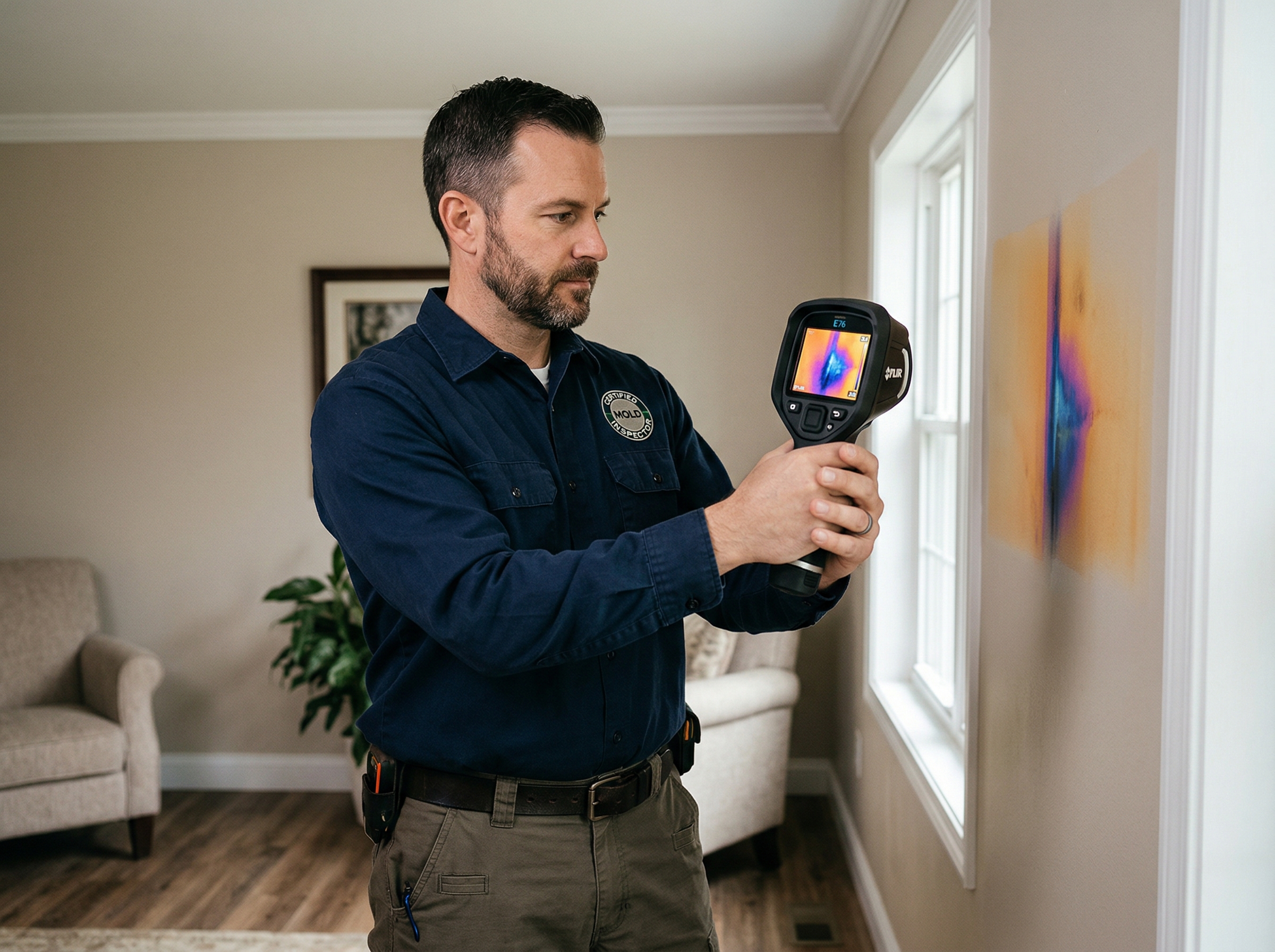
An infrared camera reveals temperature differences that indicate hidden moisture behind walls, ceilings, and floors. This non-invasive technique lets us find problem areas without cutting into your home.
- Infrared scan of walls, ceilings, and floors
- Detection of temperature anomalies that signal moisture
- Non-invasive identification of hidden water intrusion
Air Sampling
Measuring What You Breathe
Air samples are collected from multiple locations inside the home and compared against outdoor baseline levels. Not every inspection requires air sampling, but when it adds value, it provides objective data about spore concentrations.
- Indoor air samples from areas of concern
- Outdoor baseline sample for accurate comparison
- Samples sent to an independent accredited laboratory
Lab Analysis
Accredited Results You Can Trust
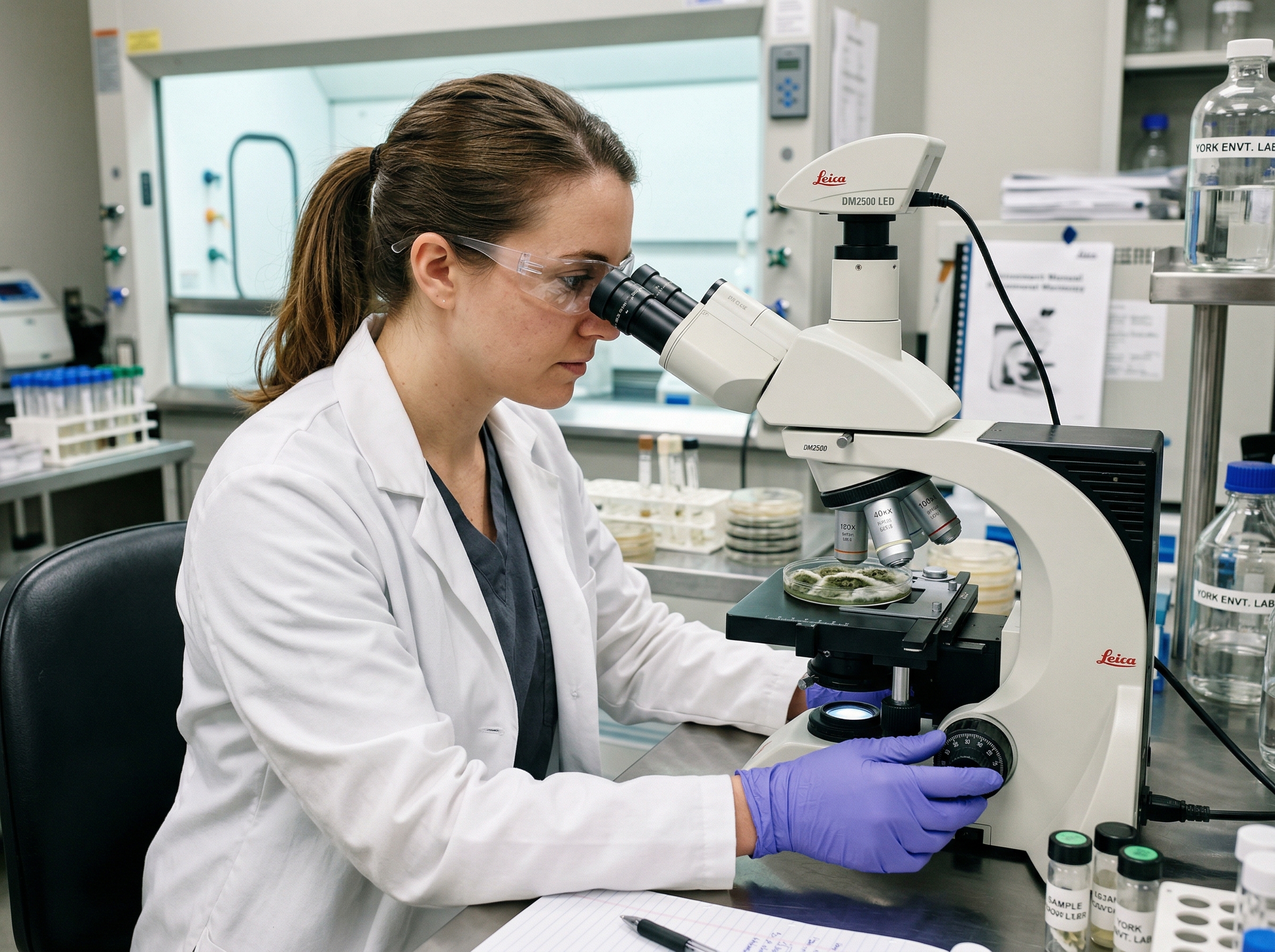
All samples are analyzed by an independent, accredited laboratory. The lab identifies mold species and measures spore concentrations. The goal isn't to alarm you. It's to provide objective data you can use to make informed decisions.
- Independent accredited lab analysis
- Species identification and spore count data
- Results typically returned in 3-4 business days
Detailed Written Report
Documentation You Can Actually Read
A professional mold inspection includes a written report that documents what was found and how the inspection was performed. The report is meant to be a reference, not a pile of technical jargon.
- Areas inspected and tools used
- Moisture readings and observations
- Lab results with photos to support findings
- Plain-English explanation of what everything means
Consultation and Q&A
The Most Valuable Part of the Process
A proper mold inspection doesn't end when the tools are packed up. This conversation is often the most valuable part of the process because it helps you understand how everything fits together.
- Dedicated time to review findings together
- Clear answers to every question you have
- Explanation of next steps if any are needed
"We don't sell cleanup services. Every step of our inspection is designed to give you accurate, unbiased information."
Because we only do testing and inspection, our findings are never influenced by remediation sales. You get the facts. Then you decide.
What's Included in Every Inspection
Visual Inspection
Methodical walkthrough for visible growth, staining, or water damage
Thermal Imaging
Infrared camera detects hidden moisture behind walls or ceilings
Moisture Mapping
Digital meters map exactly where leaks or humidity issues exist
Mold Testing & Lab Analysis
Air and surface samples sent to an accredited laboratory
Written Report
Detailed, easy-to-understand report with findings and recommendations
Consultation
Plain-English explanation of all inspection findings and test results
Information and Options, Not Pressure
If mold is identified, a good inspection stays focused on information and options, not pressure or scare tactics. The purpose of the inspection is to give you clarity so you can decide what makes sense for your situation.
Mold problems are almost always tied to moisture problems. Without identifying the source of moisture, surface fixes don't last. A proper mold inspection helps you understand the full picture, not just jump to conclusions.
- Explaining what was found and where
- Discussing why it may be happening
- Outlining what should be addressed to prevent future issues
- Identifying hidden moisture issues behind finished surfaces
- Avoiding unnecessary or incomplete solutions
Why a Thorough Inspection Matters
DIY test kits and guesswork can only get you so far. A professional inspection gives you a complete, documented picture of what's actually happening in your home.
- Identify hidden moisture issues
- Avoid unnecessary or incomplete solutions
- Provide a clear starting point for next steps
- Protect your health and your home investment
Buying or Selling a Home?
Mold testing before closing can save you thousands. Real estate inspections are a specialty.
Learn about real estate inspectionsHow Much Does a Mold Inspection Cost?
Prices vary based on your location. The ranges below reflect typical costs for a mold inspection in the United States.
with up to 4 samples
Includes visual inspection, moisture mapping, thermal imaging, and up to four mold samples (air or surface). Additional samples cost $50-$300 each. Lab turnaround is usually 3-4 business days.
Typical 2-4 bedroom home. Pricing increases as square footage exceeds 3,000 sf.
with up to 4 samples
Includes visual inspection, moisture mapping, thermal imaging, and up to four mold samples (air or surface). Additional samples cost $50-$300 each. Lab turnaround is usually 3-4 business days.
For commercial properties of all types. Contact us for a custom quote on larger spaces.
Questions About Mold Inspections in Your Area?
Worried about musty odors, past water damage, or hidden mold? If you're concerned about mold, moisture, odors, or your home's air quality, a mold inspection can give you actual answers and peace of mind. For York, PA properties, call or use the form.
"Peace of mind starts with knowing."
Get the facts, then make smart decisions. That's how every inspection is done.