Case Study · Health-Related Concern & Air Sampling
When Blood Work Flagged a Mold Species and the Home’s Air Was Tested
A York County family reached out after a physician-ordered blood panel flagged a specific mold species. They wanted to know whether their home could be a source of exposure. Mastertech performed an independent whole-home mold and moisture inspection with air sampling and documented significantly elevated airborne spore counts of the same species identified in the client’s blood work.
Important:Mastertech Environmental is a mold inspection and testing company. We are not medical professionals, and nothing in this case study is medical advice, a diagnosis, or a claim that any building caused any person’s illness or symptoms. Our work is limited to inspecting and documenting environmental conditions. All health-related questions and decisions belong with a qualified physician.
This case study is based on conditions encountered during a York County mold inspection. The client’s name, address and other identifying details have been omitted or changed to protect their privacy. No client name, laboratory report, sample identification number or other private information is published.
Inspection Overview
Project Facts at a Glance
General Location
York County, Pennsylvania
Property Type
Single-family home, occupied by the family
Reason for Inspection
A physician-ordered blood panel flagged a specific mold species
Original Concern
Whether the home's air could be a source of exposure
Suspected Driver
Chronic damp conditions and hidden moisture in living spaces
Inspection Type
Whole-home mold and moisture inspection with air sampling
Services Used
Visual assessment, moisture testing, humidity readings, thermal imaging support, and air sampling for laboratory analysis
Key Result
Significantly elevated airborne spore counts of the same species flagged in the blood work
Report Turnaround
One to two business days
Inspector
Tom Duff, Certified Mold Inspector
Independence
Mastertech does not sell mold remediation
Background
Why the Inspection Was Requested
The family had been dealing with ongoing discomfort at home for months. Their physician ran a blood panel and flagged a specific mold species. Their doctor’s question was practical: could something in the house be a source of exposure? That is where a mold inspection company comes in — not to treat anyone, but to look at the building and its air.
It is worth being clear about the boundary here. A blood result is a medical finding, and interpreting it is the physician’s job. What we can do is measure the environment: is a particular mold species present in the home’s air, and at what level compared to outdoors? Those are two separate questions, and this case study keeps them separate on purpose.
To answer the environmental question, it helps to keep a few things distinct, because they are frequently confused:
- A professional mold inspection is a focused, diagnostic evaluation of moisture and suspected growth in a building.
- Air sampling measures the spore types and levels in the indoor air and compares them to an outdoor reference.
- A blood test is a medical measurement of a person, ordered and interpreted by a physician — not something we perform or read.
- A remediation estimate is a proposal to perform and price cleanup work — something a remediation contractor provides.
Mastertech’s role was to evaluate and document the home’s conditions and sample its air. We do not sell cleanup services, so there is no incentive to inflate a finding. The family received an independent read they could hand to their doctor and to any contractor they chose.
Scope
Scope and Limitations
This was a whole-home mold and moisture inspection with air sampling. By agreement with the homeowner, it focused on:
- Accessible living spaces, bedrooms, closets and common areas
- Windows, ceilings and areas behind and beneath furniture where damp conditions can hide
- Indoor air conditions, including relative humidity and temperature
- Air samples for laboratory analysis, with a same-day outdoor reference sample
Concealed wall cavities and other areas not opened were not part of the non-destructive evaluation. Mold inspections are visual and non-destructive unless the property owner separately authorizes invasive investigation. In this case, no wall openings were requested.
Because the inspection was non-destructive, it does not imply that concealed areas were confirmed to be free of mold. And because we are not medical professionals, nothing here should be read as a statement about anyone’s health — only about the environmental conditions we observed and measured.
Conditions
Damp Conditions That Feed Airborne Spores
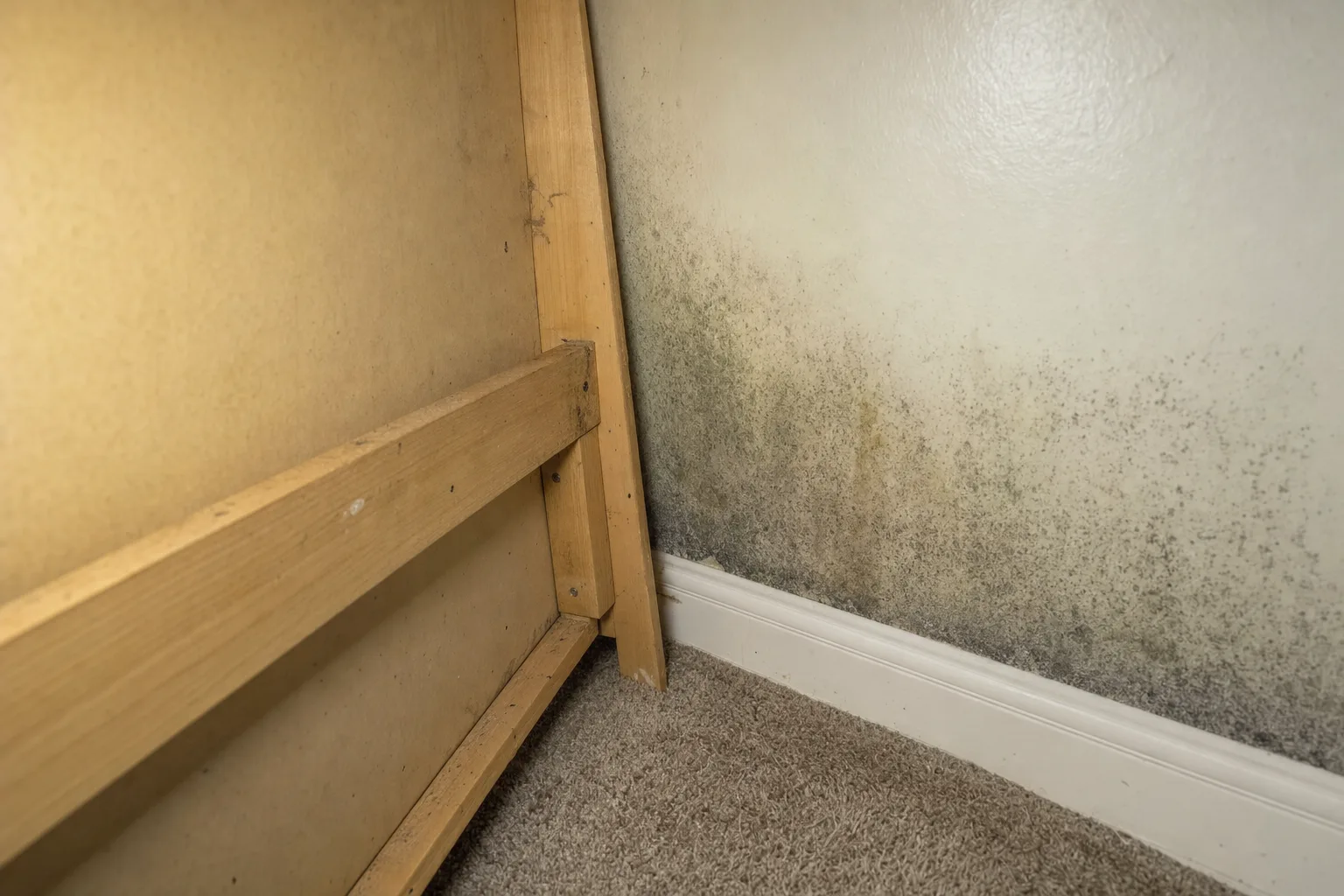
Before sampling the air, we walked the home to understand where moisture might be feeding growth. Elevated humidity was documented in several rooms, and moisture readings were higher than expected at a window area, along a closet wall and near a ceiling stain from past moisture.
None of it was dramatic at first glance. This was not a flooded home. It was the quieter kind of problem — damp materials tucked behind furniture, a musty closet, condensation at a window — that keeps surfaces wet enough for mold to develop and release spores into the air over time.
That distinction matters for a health-related concern. A room can look mostly normal and still carry a real airborne spore load, especially where damp materials sit undisturbed and air circulates through registers and ductwork.
Air Sampling
The Air Sampling Result and the Species Match
Indoor air samples were collected from the affected living areas and compared to a same-day outdoor reference sample. The laboratory analysis is what made this project notable:
- The indoor air samples documented significantly elevated airborne spore counts compared to the outdoor reference.
- The predominant elevated spore type matched the same mold species the client's physician had flagged in blood work.
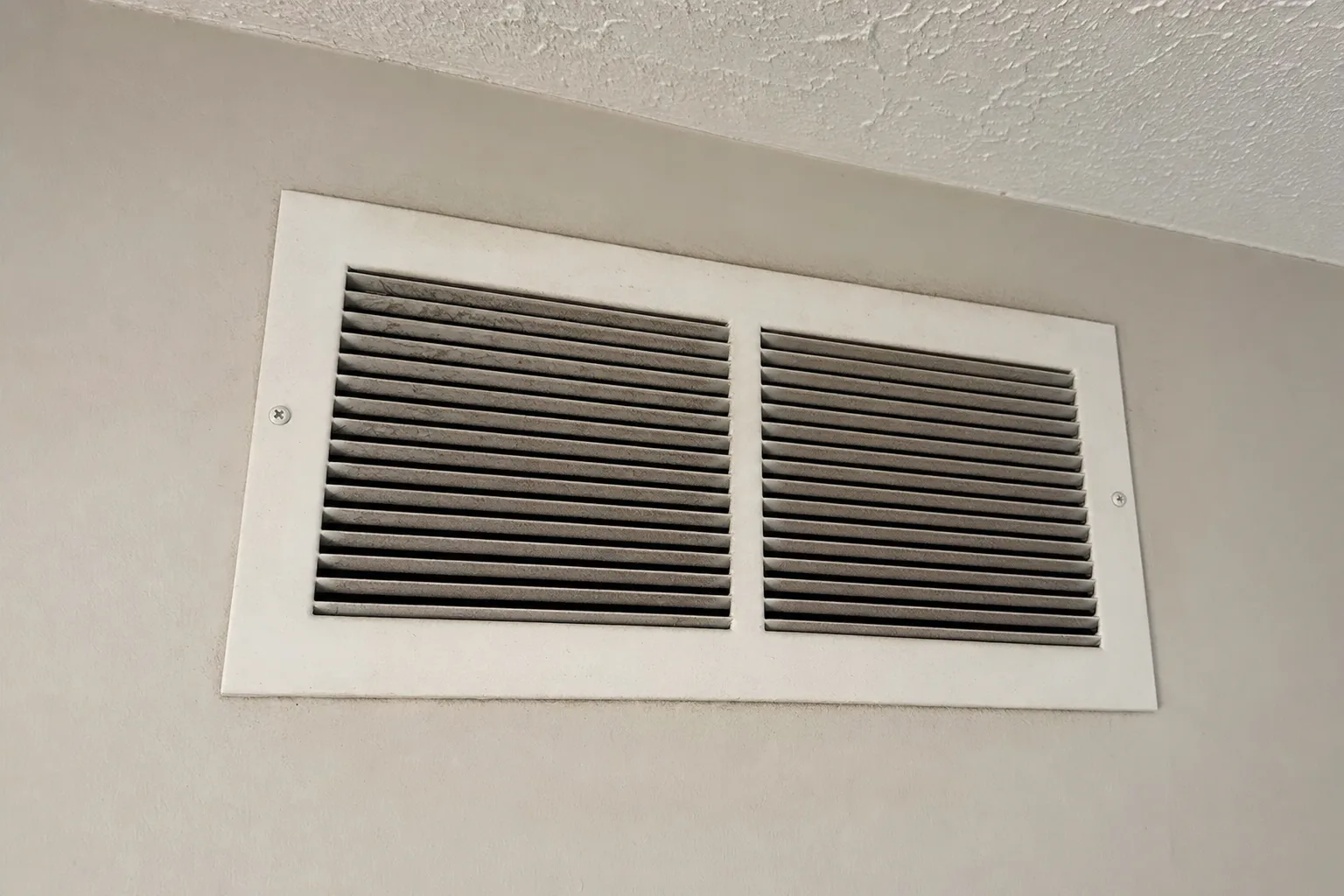
- Return-air registers with dust streaking helped explain how spores could circulate through the home.
- The environmental picture — damp materials, elevated humidity and elevated indoor spores — was internally consistent.
- Every result was documented in the independent written report.
Here is the careful part. A species match between a blood result and the air is a meaningful environmental observation, and it is why the family and their doctor took it seriously. But it is not, by itself, proof that the home caused any illness. That is a medical determination, and we are not qualified to make it. What we can say is factual and limited: this specific species was significantly elevated in the home’s air.
Methods
Inspection Tools and Methods
A consistent process keeps findings objective. Here is what the evaluation drew on — and, just as importantly, what each tool can and cannot tell you.
Whole-Home Visual Inspection
A careful, non-destructive review of accessible living spaces, closets, behind furniture, window areas and ceilings for signs of moisture and suspected growth.
Professional Moisture Measurements
Meter readings help evaluate walls, ceilings and adjacent materials, but they must be interpreted based on the material, location and surrounding conditions.
Air Sampling
Indoor air samples, compared to a same-day outdoor reference, indicate whether airborne spore levels are elevated inside and which spore types are present.
Thermal Imaging Support
Infrared imaging detects temperature differences and possible moisture patterns behind surfaces. It does not directly see or prove the presence of mold.
Independent Laboratory Analysis
Samples are submitted to an independent accredited laboratory. Results are interpreted together with the visual inspection and moisture information.
Written Findings and Photos
Independent, plain-language documentation with recommendations the homeowner can act on and share with the appropriate parties, including their physician.
Air samplingtells you what spore types are in the indoor air and how the level compares to outdoors. It describes the environment — it does not diagnose a person.
Moisture meters and humidity readings explain why spores may be elevated by identifying where materials stay damp enough to support growth.
Laboratory
How the Laboratory Results Were Handled
Samples were submitted to an independent accredited laboratory, and the results were read together with the visual inspection, humidity and moisture information rather than in isolation. That is what turns a set of numbers into something useful.
- Indoor air results were always compared to a same-day outdoor reference, so the numbers had context.
- The dominant elevated spore type was noted alongside the species flagged in the client's blood work.
- Laboratory findings were paired with the observed damp conditions to explain the source.
- The report used measured, plain language and avoided health conclusions.
Representative language only: in a case like this, an indoor air sample may read several times higher than a same-day outdoor reference for the species in question, while the outdoor sample stays within a typical seasonal range. Any figures referenced here are illustrative for explaining the process. They are not an actual client laboratory result, and no client sample identification, spore counts or blood-work values from this project are published.
A responsible report keeps the language measured. There is no “toxic mold” conclusion drawn from one air sample, and a laboratory result does not prove that a building caused any person’s symptoms or illness. The point of sampling is to characterize what is present in the air so the family and their physician can make informed decisions.
Findings
Inspection Findings
The findings are grouped so it is clear what was observed, what was measured and what fell outside the scope. Each item describes the environment only — not anyone’s health.
Airborne mold findings
- Indoor air samples documented significantly elevated airborne spore counts compared to the same-day outdoor reference.
- The elevated indoor spore type matched the same mold species the client's physician had flagged in blood work.
Suspected or observed growth
- Surface discoloration consistent with possible fungal growth was documented in several living areas.
- A persistent musty odor was noted in rooms with damp conditions and limited air movement.
Moisture conditions at the time of inspection
- Elevated relative humidity was documented in parts of the home.
- Elevated moisture readings were documented at a window area, a closet wall and a ceiling stain.
How the air could carry spores
- Return-air registers showed dust streaking, a common pathway for airborne particulates to circulate through a home.
- Damp materials in closets and behind furniture provided undisturbed places for growth to develop.
Areas requiring corrective action
- Reducing moisture and humidity, addressing damp materials, and lowering the airborne spore load through proper cleanup.
Areas outside the inspection scope
- Concealed wall cavities and any areas not opened during this non-destructive evaluation were not inspected.
Recommendations
Practical Recommendations
Recommendations are matched to the environmental findings. With an elevated-airborne-spore problem, the goal is to fix the moisture, clean the source and then verify that the air has actually improved — while medical questions stay with the physician.
- Have the observed growth and damp materials addressed using appropriate mold-remediation procedures rather than painting or spraying over surfaces.
- Identify and correct the moisture sources feeding the damp areas, including any leaks, condensation and elevated humidity.
- Maintain appropriate indoor humidity with properly sized dehumidification and improved ventilation.
- Have the HVAC system and ductwork evaluated so cleanup does not simply recirculate spores back into the air.
- Perform post-remediation verification, including follow-up air sampling, to confirm airborne spore levels have returned to an acceptable range.
- Share the written inspection report and laboratory information with the treating physician so medical decisions rest with the medical professional.
- Retain the inspection and laboratory documentation for future reference.
Homeowner Value
Value to the Family
The purpose of an inspection like this is to give the family — and their physician — better information to work from. In this project, that meant:
Mastertech provides inspection and documentation only. We are not medical professionals, we do not diagnose or treat any condition, and we do not perform remediation. Health decisions belong with a qualified physician.
Documentation
Inspection Photograph Gallery
Representative photographs of the conditions documented during this inspection.
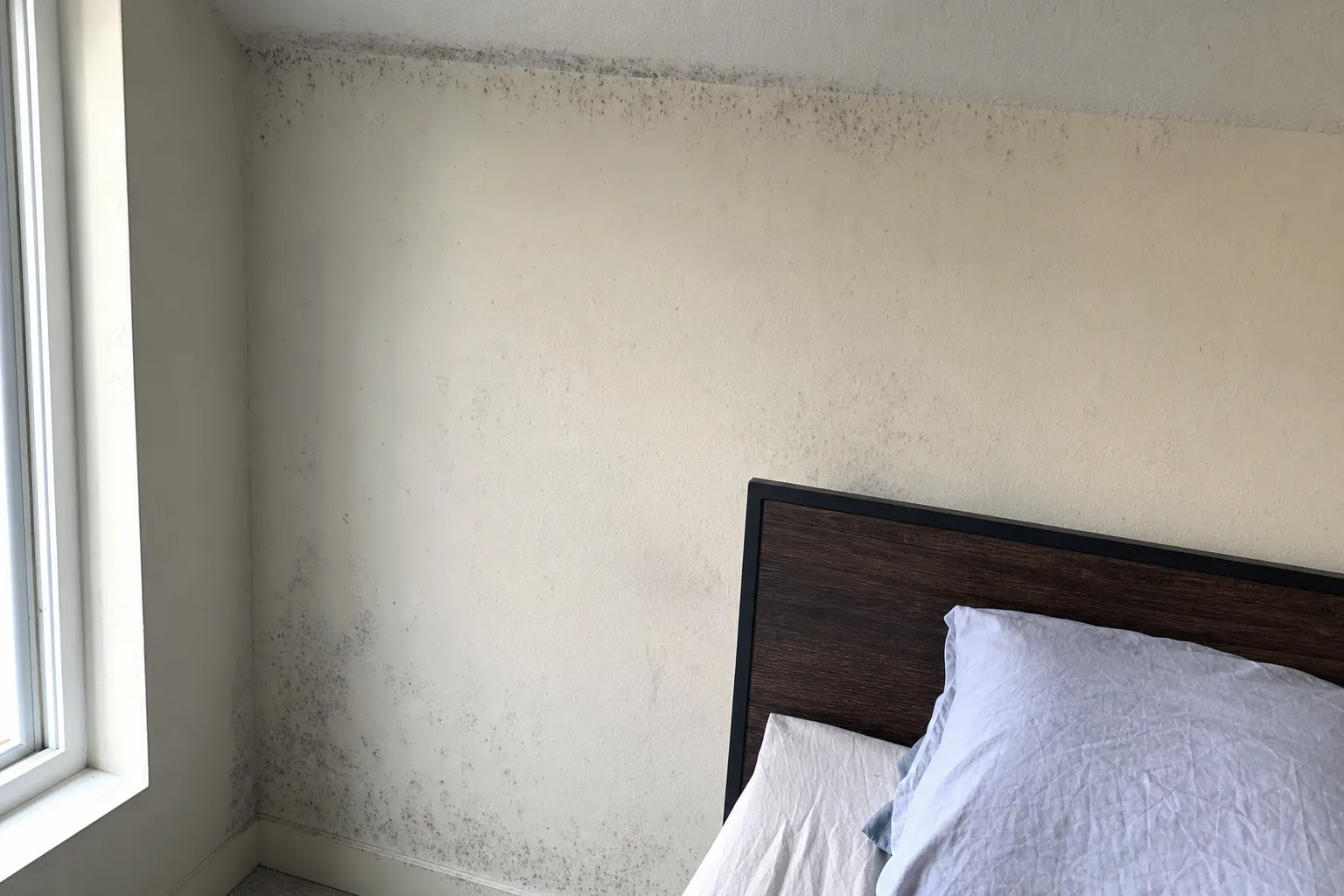
Discoloration behind a headboard
Faint gray-black mold spotting and mottled discoloration on a bedroom wall near the ceiling corner, documented during a York County home inspection.
Return-air register
Wall register with dark dust streaking around the louvers, a common way airborne particulates move through a home's air.
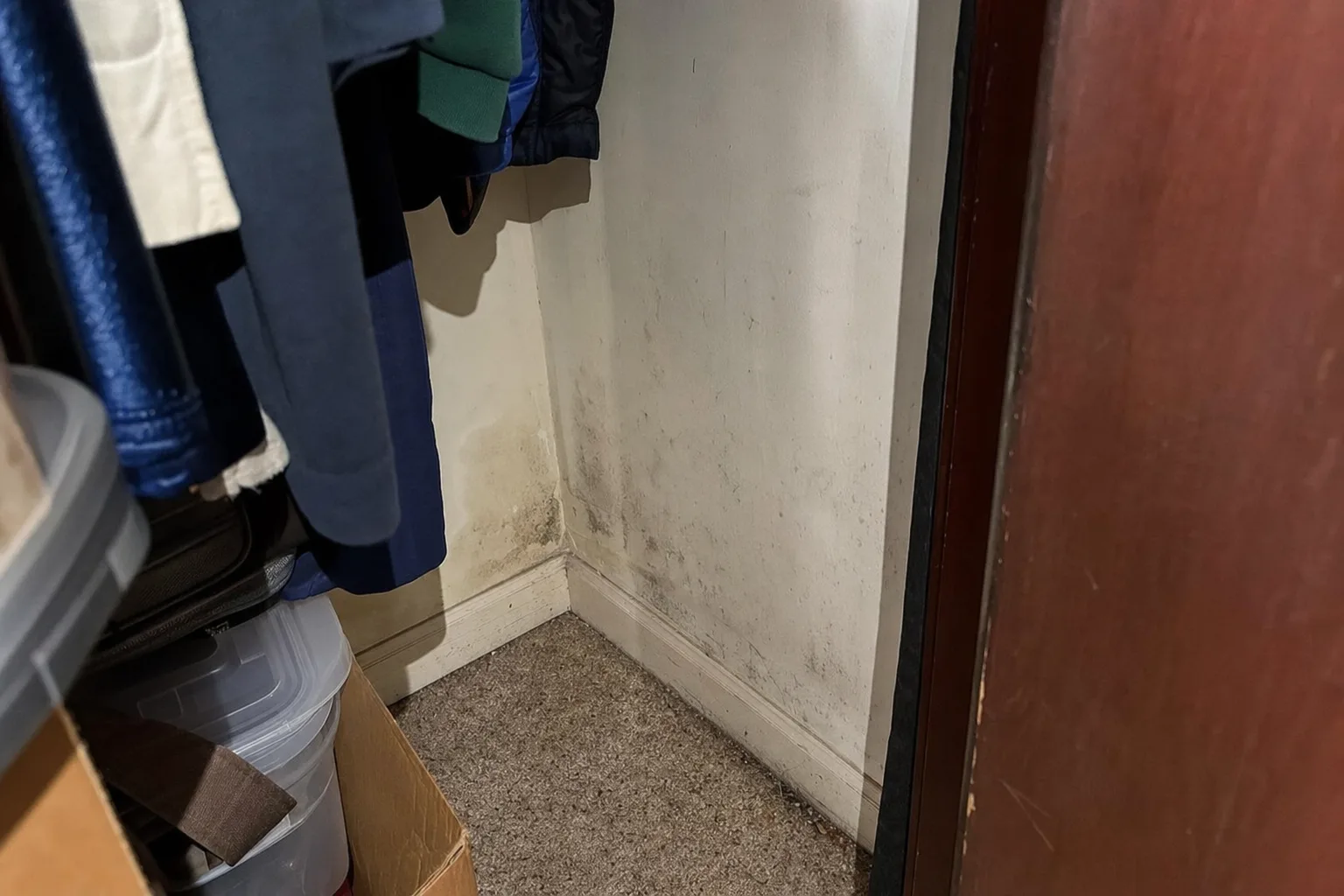
Musty closet corner
Closet interior with faint surface mildew and water staining low on the drywall near the floor in an older home.
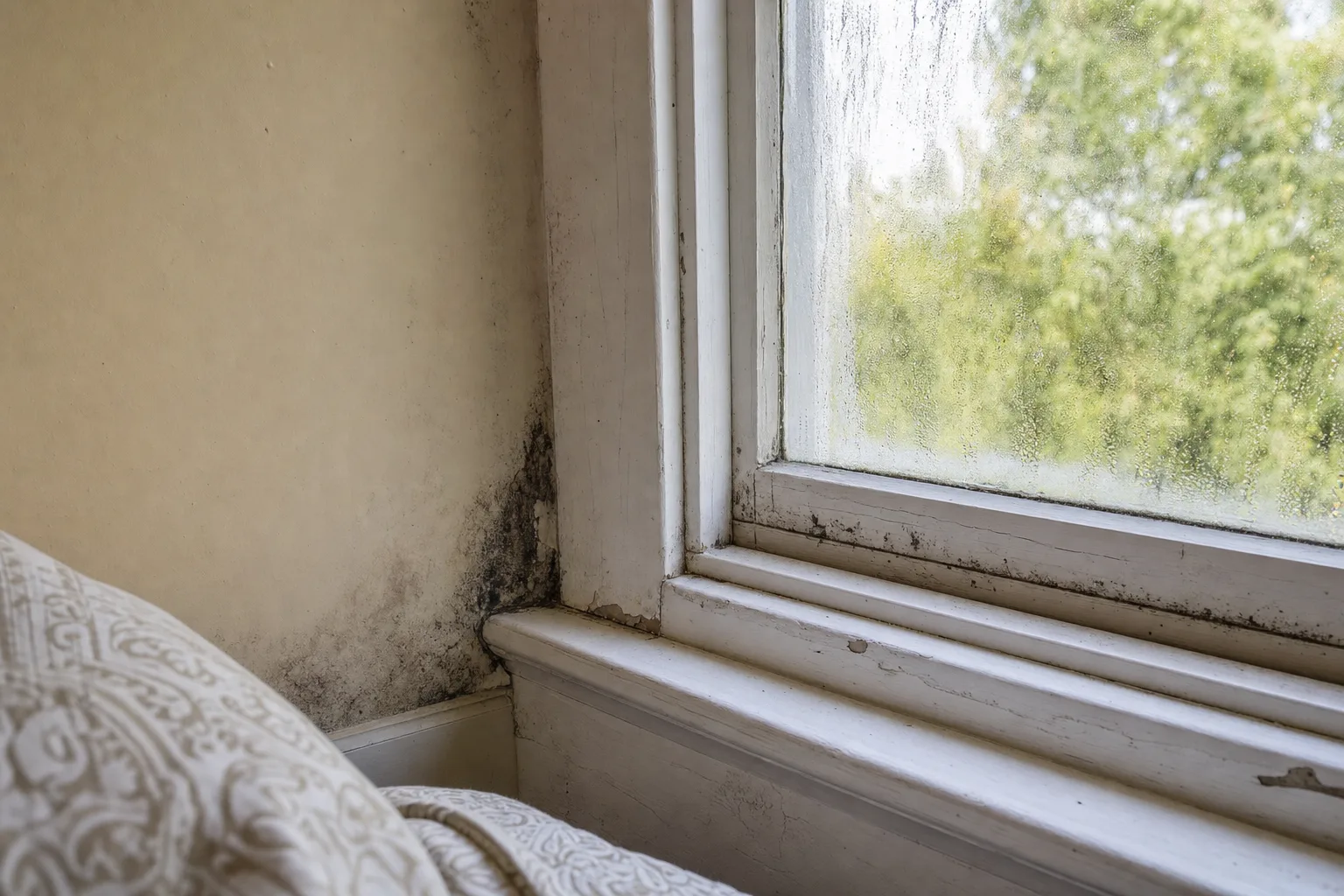
Condensation at a window
Bedroom window frame with condensation staining, peeling paint and faint mildew along the lower sash and adjacent wall corner.
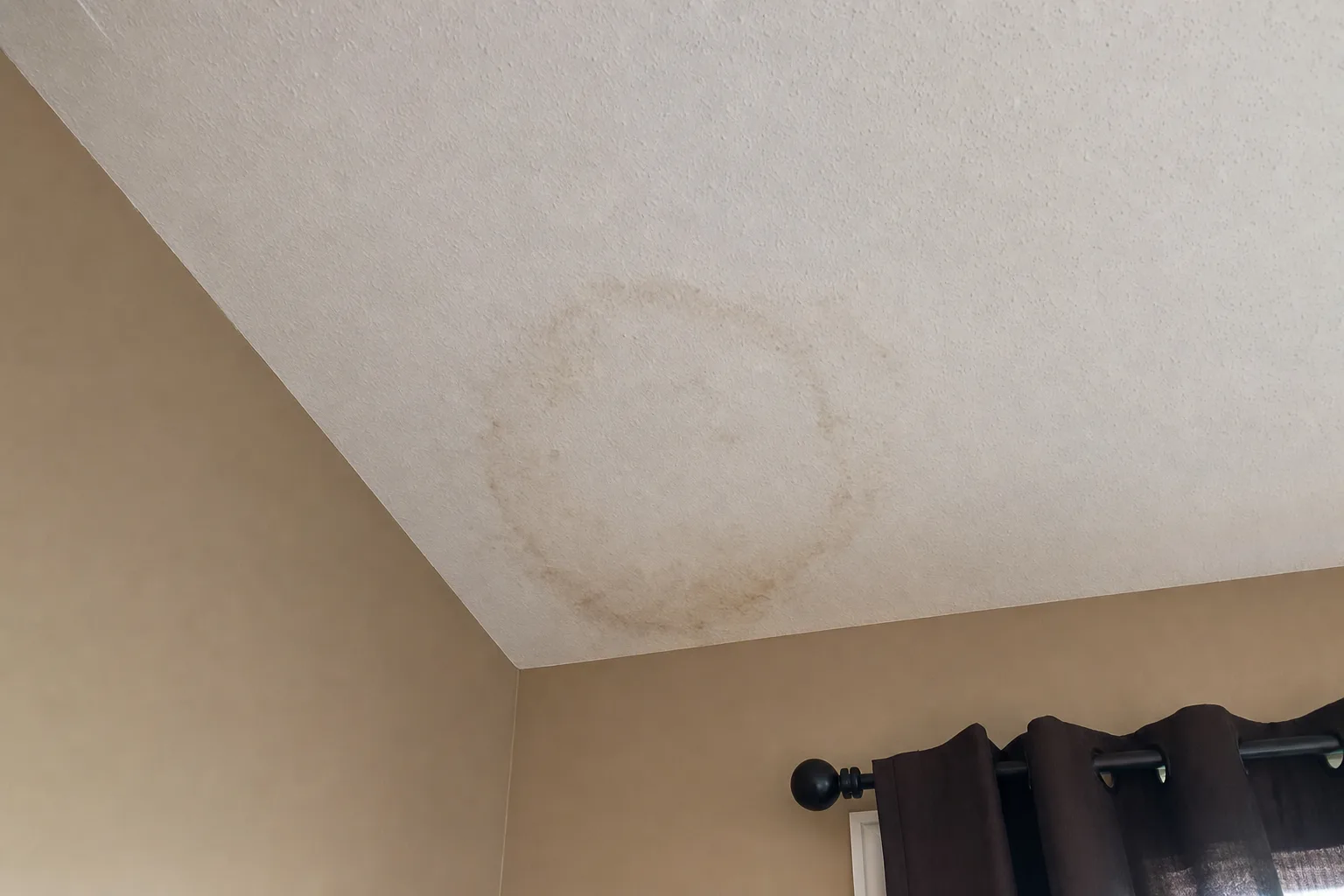
Ceiling stain from past moisture
Bedroom ceiling corner with a faint brownish water stain ring and light mottled discoloration from past moisture.
Hidden damp behind furniture
Wall behind furniture pulled slightly away revealing faint mildew spotting and a musty damp patch that had been concealed.
Takeaways
What This Case Demonstrates
Related Services
Explore the inspection and testing services that support this kind of evaluation across York County.
Indoor air quality testing
How air sampling works and what elevated indoor spore counts can and cannot tell you.
Learn moreERMI mold testing
A dust-based screening method that can characterize the mold species present in a home over time.
Learn moreWhat doctors often ask for when mold is suspected
How a documented inspection supports the questions a physician may have.
Learn moreMoisture intrusion inspection
Tracing where water enters a home and how it feeds the damp conditions that support mold.
Learn moreMold inspections and testing in York, PA
Local mold inspection and testing services for York and surrounding communities.
Learn moreSchedule an Inspection
Concerned Your Home’s Air Could Be a Source?
Mastertech Environmental provides independent mold and moisture inspections and air sampling for families, homeowners, buyers, sellers and agents throughout York and surrounding York County communities. If a doctor has raised a mold concern, we can document what is actually in your home’s air — and leave the medical questions to your physician.
- One- to two-business-day laboratory turnaround
- Air sampling compared to a same-day outdoor reference
- Written report you can share with your physician and a contractor
- No remediation sales, so there is no incentive to overstate a finding
Schedule an Inspection
Call or text 717-676-3574 or fill out the form below to get started.