What That "Earthy" Smell in Your York Home Usually Means
That damp, soil-like odor is not just your house being old. In most cases, it is a direct signal that moisture and biology are at work somewhere inside your home's structure - and that it's worth finding out exactly where.
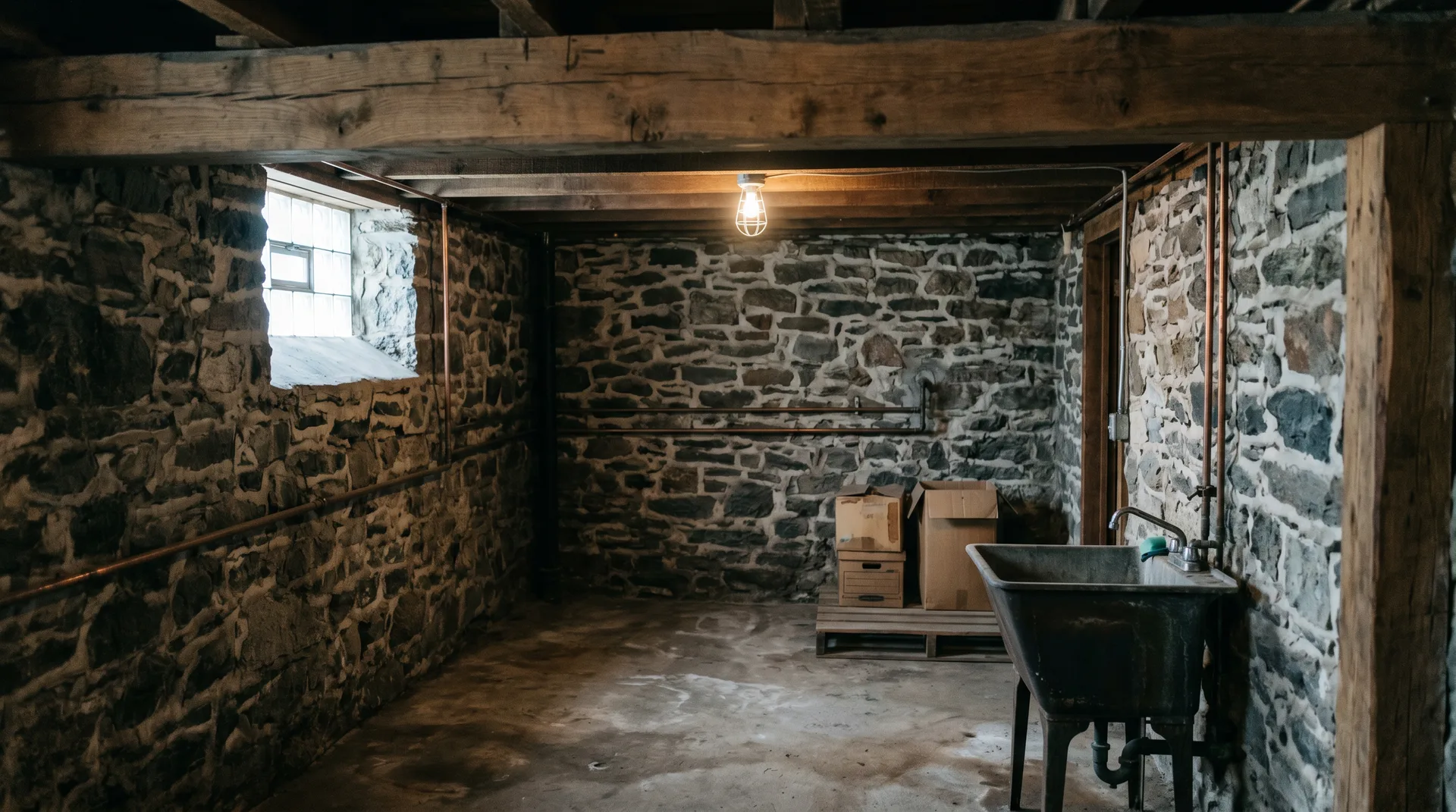
Stone foundation basements like this are one of the most common sources of earthy odors in York County homes.
You walk into your basement, your crawl space, or sometimes just a certain room in your house, and there it is - that unmistakable earthy, damp, slightly musty smell. You might have noticed it for weeks. Maybe months. You've opened windows, run fans, bought air fresheners. The smell keeps coming back.
In over 17 years of mold inspections across York County, Tom has followed that smell hundreds of times. In the vast majority of cases, it leads somewhere specific - a moisture problem that has been quietly creating the right conditions for biological growth. The smell is not random. It is information.
This article explains what that earthy odor actually is, where it most commonly comes from in York-area homes, how to use its location and behavior as diagnostic clues, and what a professional inspection can tell you that no amount of sniffing around on your own will reveal.
The Chemistry Behind the Smell
The earthy, musty odor associated with mold is caused by microbial volatile organic compounds (MVOCs) - gases released by mold as it metabolizes organic material like wood, drywall paper, and cellulose. Specific compounds like geosmin (the same compound responsible for the smell of fresh rain on soil), 1-octen-3-ol, and 2-methylisoborneol are what your nose is actually detecting. These compounds are detectable by the human nose at extremely low concentrations - sometimes before any visible mold growth is present.
Understanding that the smell is a byproduct of active biological metabolism is important. It means the organism producing it is alive, actively growing, and actively consuming the organic material in your home's structure. This is not a smell left over from something that happened years ago and resolved itself. An earthy smell that persists is an ongoing process.
Why York County Homes Are Especially Prone to This Problem
York County's housing stock skews older. Many homes in York city and surrounding boroughs were built before modern moisture management practices became standard. Stone and brick foundations without waterproofing membranes, crawl spaces with dirt floors and no vapor barriers, and older HVAC systems that were not designed with indoor humidity control in mind - these are the conditions that make earthy smells a common complaint.
Add to that York's climate: humid summers where outdoor relative humidity regularly exceeds 80%, spring thaw periods that saturate the soil around foundations, and periodic heavy rain events that overwhelm older drainage systems. The combination of aging housing infrastructure and a challenging climate creates a high-moisture environment that mold is very well suited to exploit.
If you live in York, Springettsbury Township, West Manchester Township, Dover, Dallastown, or any of the surrounding communities, your home's construction era and local climate are working against you when it comes to moisture management. That earthy smell is often the first sign that the moisture has found a place to settle and something is growing there.
6 Most Common Sources of Earthy Smells in York Homes
Each source has its own pattern. Knowing which one fits your situation helps narrow down where to look.
Mold Growing Behind Walls or Under Floors
Most CommonThe most frequent culprit behind a persistent earthy smell in York County homes is active mold growth hidden inside wall cavities, under flooring, or in ceiling spaces. Mold produces gases called microbial volatile organic compounds (MVOCs) as it metabolizes organic material - drywall paper, wood framing, carpet backing. These MVOCs are what your nose is detecting. The fact that you can smell them means they are actively entering your breathing air. This is not a cosmetic issue.
Crawl Space Soil and Vapor Intrusion
Very Common in York CountyYork County has a significant number of older homes with unconditioned crawl spaces. When a crawl space lacks proper vapor barriers and ventilation, soil gases - including that characteristic earthy, damp smell - migrate upward into the living space through gaps in the floor system. Crawl spaces are also extremely prone to mold growth on wood framing and floor joists, which compounds the odor problem significantly. If the smell is strongest on the first floor, especially near the center of the home, the crawl space is a prime suspect.
Basement Moisture and Active Mold
CommonBasements in York, PA deal with hydrostatic pressure from the surrounding soil, seasonal groundwater fluctuations, and high ambient humidity throughout the summer months. These conditions create chronic low-level moisture that supports mold growth on concrete block walls, wood framing, stored cardboard boxes, and drywall in finished basement spaces. The earthy smell you notice when you open the basement door is almost always a sign of active biological activity - either mold, bacteria, or both.
HVAC System Distributing the Odor
Serious - Whole-Home ImpactIf the earthy smell hits you when the heat or air conditioning kicks on, or if it seems to be coming from every room equally, the HVAC system may be the delivery mechanism. Mold growing in the air handler, on the evaporator coil, in the drain pan, or inside the ductwork gets distributed throughout the entire home with every cycle. This is one of the more serious scenarios because it means mold spores are being actively delivered to every room, including bedrooms.
Plumbing Leaks Inside Wall Cavities
Often MissedSlow plumbing leaks inside wall cavities are a common cause of localized earthy smells in kitchens, bathrooms, and laundry areas. Even a small drip from a supply line or drain connection creates a persistently damp environment inside the wall that mold colonizes quickly. Because the leak is hidden, it often goes undetected for months or years. The first sign is usually the smell - not water staining or visible damage.
Attic Condensation and Roof Leaks
SeasonalAttic mold from poor ventilation or roof leaks can produce odors that migrate down into the living space, particularly in homes where the attic shares air pathways with the rest of the house. The smell is often most noticeable in upstairs bedrooms and hallways. In York County, attic mold is frequently found after roof work, ice dam events, or when bathroom exhaust fans are improperly vented into the attic rather than to the exterior.
What MVOCs Are and Why They Matter
Most homeowners focus on mold spores as the health concern. But the volatile organic compounds that mold produces are also biologically active and can cause symptoms on their own - independent of spore exposure. Here's what the research tells us about MVOCs:
This is why waiting until you can see mold is a mistake. The smell tells you something is already happening. By the time mold is visible, it has typically been growing for weeks or months. Learn more about spotting hidden mold before it becomes a bigger problem.
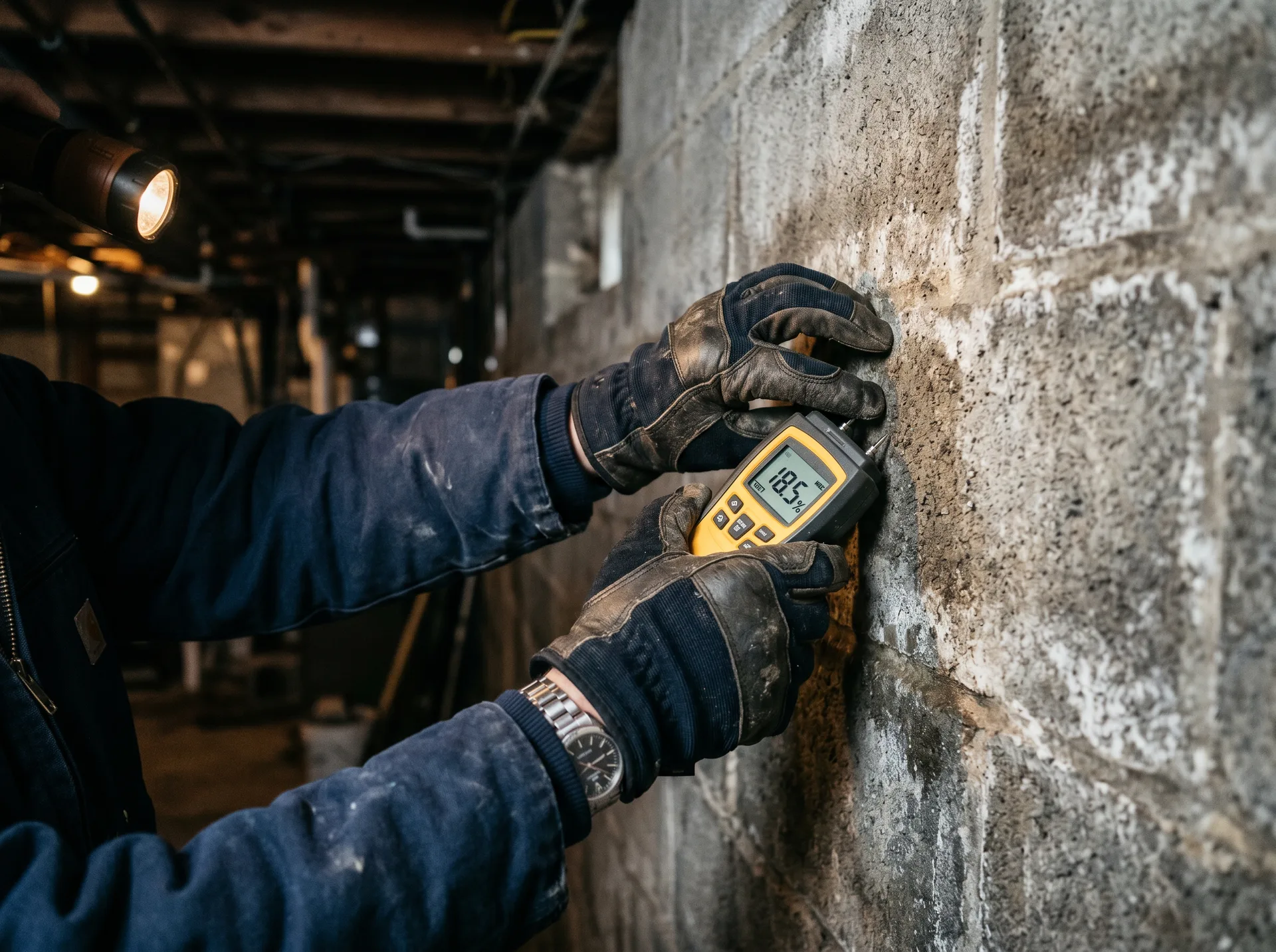
A moisture meter measures moisture content inside building materials - often revealing the source of an earthy smell before any mold is visible.
Use the Location of the Smell as a Clue
Where the smell is strongest and when you notice it most are useful diagnostic indicators. This table can help you narrow down the likely source before calling for an inspection.
Where You Notice It
Strongest in the basement or near basement door
Likely Suspect
Basement mold, foundation moisture, floor joist mold
Where You Notice It
Strongest on the first floor, especially center of home
Likely Suspect
Crawl space mold, vapor intrusion, soil gases
Where You Notice It
Strongest in upstairs bedrooms or hallways
Likely Suspect
Attic mold from poor ventilation or roof leaks
Where You Notice It
Strongest in bathroom or under kitchen sink
Likely Suspect
Hidden plumbing leak, bathroom mold behind tile or drywall
Where You Notice It
Hits you when HVAC turns on, or equal throughout home
Likely Suspect
HVAC mold - coil, drain pan, ductwork, or air handler
Where You Notice It
Comes and goes with rain or high humidity
Likely Suspect
Foundation seepage, crawl space vapor, or basement moisture cycling
Important: Location Clues Are a Starting Point, Not a Diagnosis
The table above can help you identify where to look, but earthy smells in homes often have multiple contributing sources. A smell that seems to come from the basement may actually be distributed by the HVAC system originating from the crawl space. A thorough professional inspection is the only way to identify all sources and their root causes with confidence.
Why DIY Fixes Usually Don't Work
The first instinct when you notice an earthy smell is to try to eliminate it. Homeowners run dehumidifiers, apply bleach to visible spots, buy HEPA air purifiers, and add baking soda and charcoal odor absorbers. Sometimes the smell fades temporarily. It almost always comes back.
Here's why: these approaches address the symptom, not the source. A dehumidifier reduces ambient humidity, which can slow mold growth, but it does not kill existing colonies or eliminate the moisture source that is feeding them. Bleach applied to a surface may kill surface mold but does not penetrate porous materials like wood or drywall where the mold roots (hyphae) are embedded. Air purifiers filter spores from the air but do nothing about the mold producing them. Learn more about what dehumidifiers can and cannot do for mold prevention.
The earthy smell will persist as long as the mold colony is alive and the moisture that supports it is present. The only way to permanently eliminate the smell is to find the source, remediate the mold, and fix the moisture problem that caused it. That requires knowing exactly where the mold is and what is feeding it - which requires a professional inspection.
When the Smell Becomes a Health Concern
Not every earthy smell represents an immediate health emergency. But there are circumstances that elevate the urgency considerably. You should treat the situation as a priority if:
- Children, elderly individuals, or anyone with asthma, allergies, or a compromised immune system lives in the home
- Occupants are experiencing respiratory symptoms, persistent headaches, fatigue, or eye irritation that improve when they leave the house
- The smell is present in bedrooms or areas where people spend extended time
- The smell has been present for six months or longer
- There has been any history of water intrusion, flooding, or plumbing leaks
- The smell intensifies when the HVAC system runs
- The smell gets noticeably stronger after rain or during humid weather
If any of these apply to your situation, the earthy smell warrants prompt professional attention. For more context on how mold exposure affects different members of the household, see why kids and pets often show mold symptoms first and how mold affects sinus issues and respiratory comfort.
The Relationship Between Earthy Smells and Real Estate Transactions
If you are buying or selling a home in York County and you notice an earthy smell during a showing or inspection, take it seriously. An earthy smell in a home being sold is a disclosure issue - and ignoring it can have significant financial consequences for both buyers and sellers.
For buyers: an earthy smell that a home inspector notes but does not investigate further is not a clean bill of health. A general home inspection is not a mold inspection. The inspector may note "musty odor in basement" in the report, but that observation does not tell you what is causing it, how extensive it is, or what it will cost to address. Before closing on a home with an earthy smell, get a professional mold inspection from an independent inspector who has no financial stake in the transaction.
For sellers: disclosing a known mold problem is required in Pennsylvania. An earthy smell that you have been aware of and have not investigated is a potential liability. Getting an inspection before listing gives you the information you need to either address the problem or disclose it accurately. It also prevents the scenario where a buyer's inspector finds a mold problem that kills the deal at the last minute.
Read more about why buyers and sellers in York, PA should not skip the mold inspection.
What a Professional Mold Inspection Covers
Here's exactly what happens during a professional mold inspection when the presenting complaint is an earthy smell.
Visual Assessment of All Accessible Areas
A thorough inspection covers the basement, crawl space, attic, all bathrooms, the HVAC system, and any areas of visible staining or past water damage. An experienced inspector knows the specific spots that York County homes are most vulnerable - stone foundation walls, older balloon-frame construction, and inadequately vented crawl spaces.
Calibrated Moisture Meter Readings
A moisture meter measures the moisture content inside building materials - walls, floors, ceilings, and wood framing - without destructive testing. Elevated moisture readings pinpoint where mold is most likely growing, even when there is no visible surface growth. These readings document the moisture problem and help identify the source.
Air Sampling for Mold Spores
Calibrated air sampling equipment collects air from inside the home and from outside (as a control sample). These samples are sent to an accredited laboratory that identifies and quantifies the mold species present. Elevated indoor spore levels compared to outdoor baseline levels confirm that there is an active mold source inside the building envelope.
Surface Sampling When Warranted
When visible growth or suspicious discoloration is found, surface samples can be collected to confirm mold presence and identify the species. Species identification matters because some types of mold are more concerning from a health standpoint and may affect the scope and urgency of remediation.
Identification of the Moisture Source
Finding mold is only half the job. A professional inspection identifies the underlying moisture source - whether that is foundation seepage, a plumbing leak, inadequate crawl space vapor control, HVAC condensation, or roof penetration. Without addressing the source, mold will return after any remediation.
Written Report with Lab Results
You receive a written inspection report with all findings, moisture readings, photographs, and accredited lab results within one to two business days. This report is the documentation you need to make informed decisions about remediation and to verify that any remediation work is actually necessary.
Independent. Objective. No Remediation Conflict.
Mastertech York does not perform mold remediation. That means the inspection results are never influenced by the potential to sell remediation services. You get an honest assessment of what's actually in your home.
Serving York County Homeowners with Earthy Smell Concerns
Tom inspects homes across York County, including York city and the surrounding townships and boroughs. If you've noticed an earthy smell in your home - whether it's been there for years or just appeared recently - a professional inspection can tell you definitively what is causing it and what needs to be done about it.
Inspections are available in York, West Manchester Township, Springettsbury Township, Dover, Dover Township, Manchester Township, Red Lion, Dallastown, Hanover, Glen Rock, Windsor, Wrightsville, and all surrounding York County communities. Service is available for residential homes, rental properties, and commercial buildings.
If you're in the York, PA area, Red Lion, Dallastown, or Hanover, call or text Tom directly to discuss what you're noticing and whether an inspection makes sense for your situation.
After a mold inspection, if remediation is needed, Tom will provide a detailed written report that any qualified remediation contractor can use to scope and price the work. Once remediation is complete, post-remediation verification testing confirms that the work was done correctly and the mold problem has been resolved - giving you the documentation and peace of mind you need.
Related Resources
Is Your Musty Smell Actually Dangerous?
What a professional inspection typically finds when homeowners report a persistent musty odor.
Air Quality and Health Risks in York
The real health risks of untested mold exposure for York County residents.
Indoor Air Quality Testing
What every homeowner should know about IAQ testing and when it matters.
Spotting Hidden Mold Early
Early warning signs that mold may be present before it becomes a bigger problem.
Basement vs. Crawl Space Mold
Where mold shows up more often in York County homes - and why.
Air Samples vs. Surface Samples
The difference between air sampling and surface sampling explained clearly.
Noticed an Earthy Smell in Your York Home?
Tell Tom where the smell is strongest and when you notice it most. He can help you figure out whether it warrants an inspection and what the likely source might be.